
Description
Ha’penny Bridge, Dublin
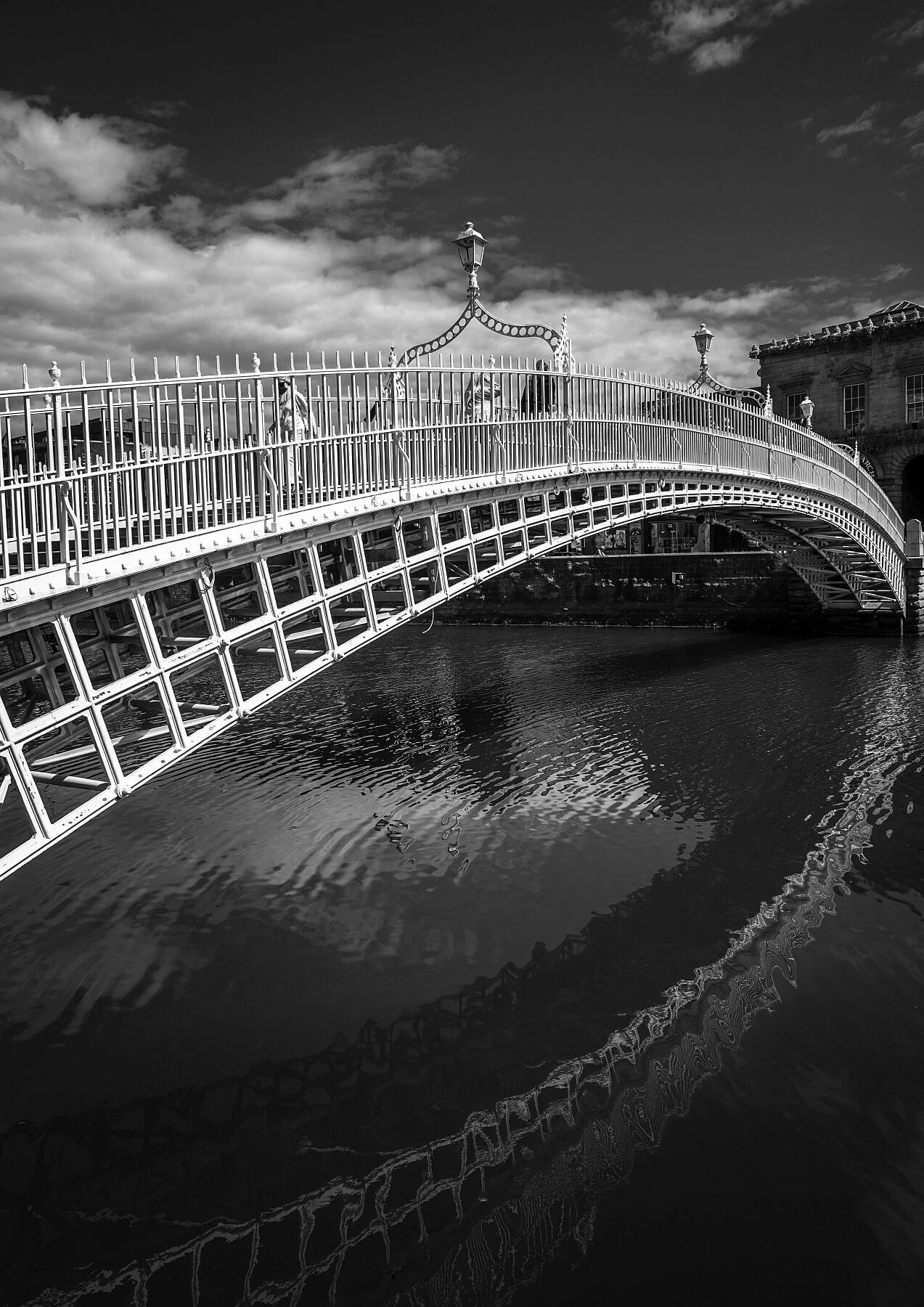
The Ha’penny Bridge stops you. Even on a busy Dublin afternoon, with people crossing in both directions, there’s something about the architecture that makes you want to slow down and look at it properly.
The curve of the arch. The ornate ironwork. The way it sits over the Liffey like it has always been there and always will be.
Most people cross it without looking down. Some stop at the middle to take a photo on their phone. Very few think about what it actually took to make something like this, or what it has quietly witnessed across two centuries of a city changing around it.
A Different Angle on the Ha’penny Bridge
I wanted to get away from the postcard angle. So I went low, close to the water, and let the bridge fill the frame from a perspective most people walk straight past.
From there, the geometry takes over. The latticed railings repeat and diminish. The arch pulls the eye upward. The river throws the whole structure back at you in reflection.
It’s a different bridge from down here. Less landmark, more sculpture. The kind of thing you’d notice immediately on a wall and find yourself still looking at ten minutes later, picking out details you hadn’t seen before.
Black and white was the only honest choice. The colour version had too much noise — parked signs, tourist jackets, the modern world creeping in at the edges.
Strip it back to light and shadow, and the bridge becomes what it actually is: a beautifully made thing, over two hundred years old, still doing its job.
Monochrome also does something to the sky that colour never quite manages. Those clouds became part of the composition — heavy and dramatic, giving the whole frame a weight that felt right for a structure this old.
I stood there a long time working the angle before I got what I came for.
Ha’penny Bridge Fine Art Print — Paper & Quality
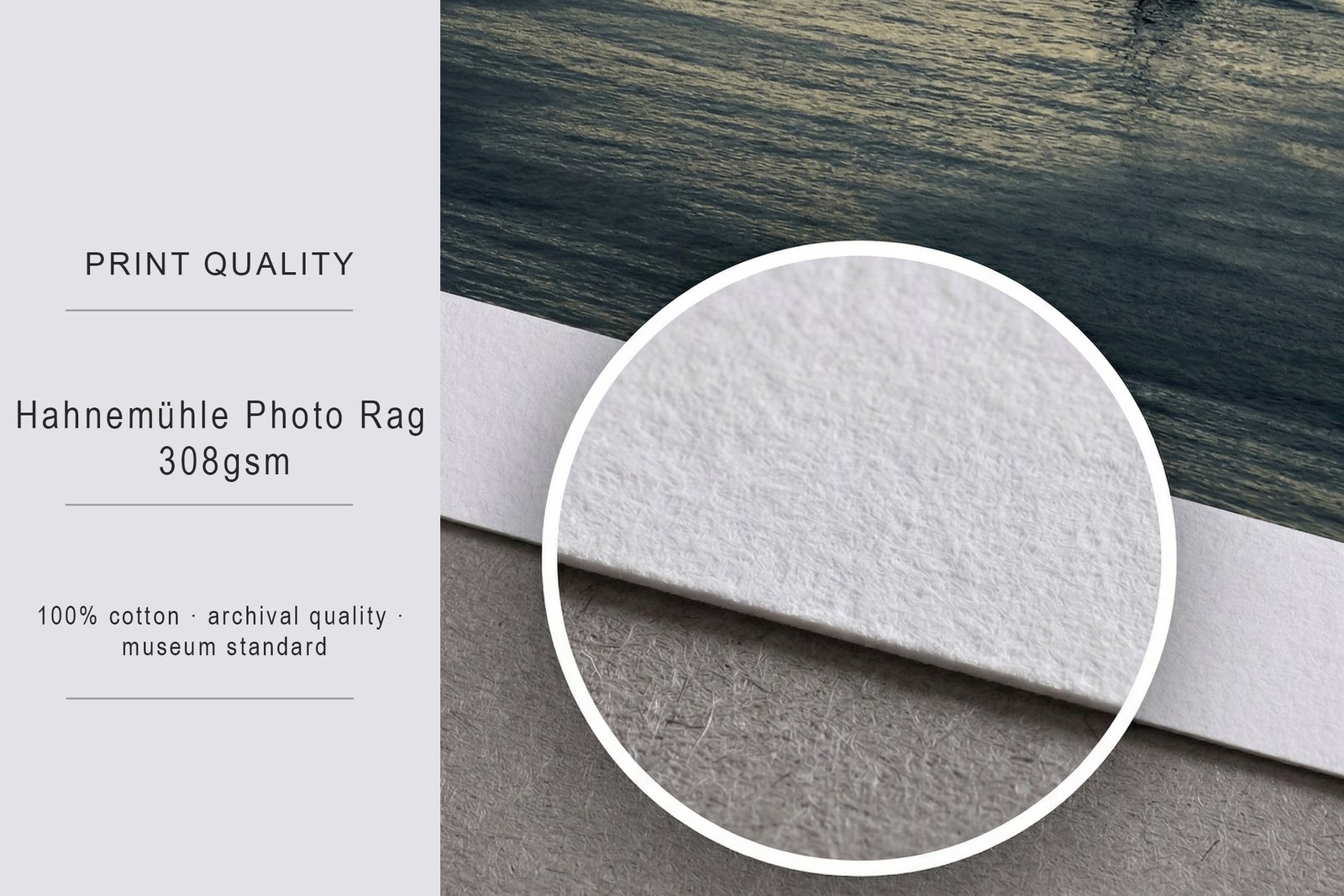
This is a fine art giclée print, produced on Hahnemühle Photo Rag — a museum-quality cotton paper with a warm, smooth surface that holds shadow detail and tonal range with exceptional fidelity.
It is the paper I trust for monochrome work. The depth of the blacks, the gradation through the midtones, the texture of the ironwork — all of it comes through in a way that a standard photographic print simply cannot match.
Each print is made to order and produced to the highest archival standards, with pigment inks rated for over 100 years without fading under normal display conditions. It arrives ready to frame, with a small white border for handling.
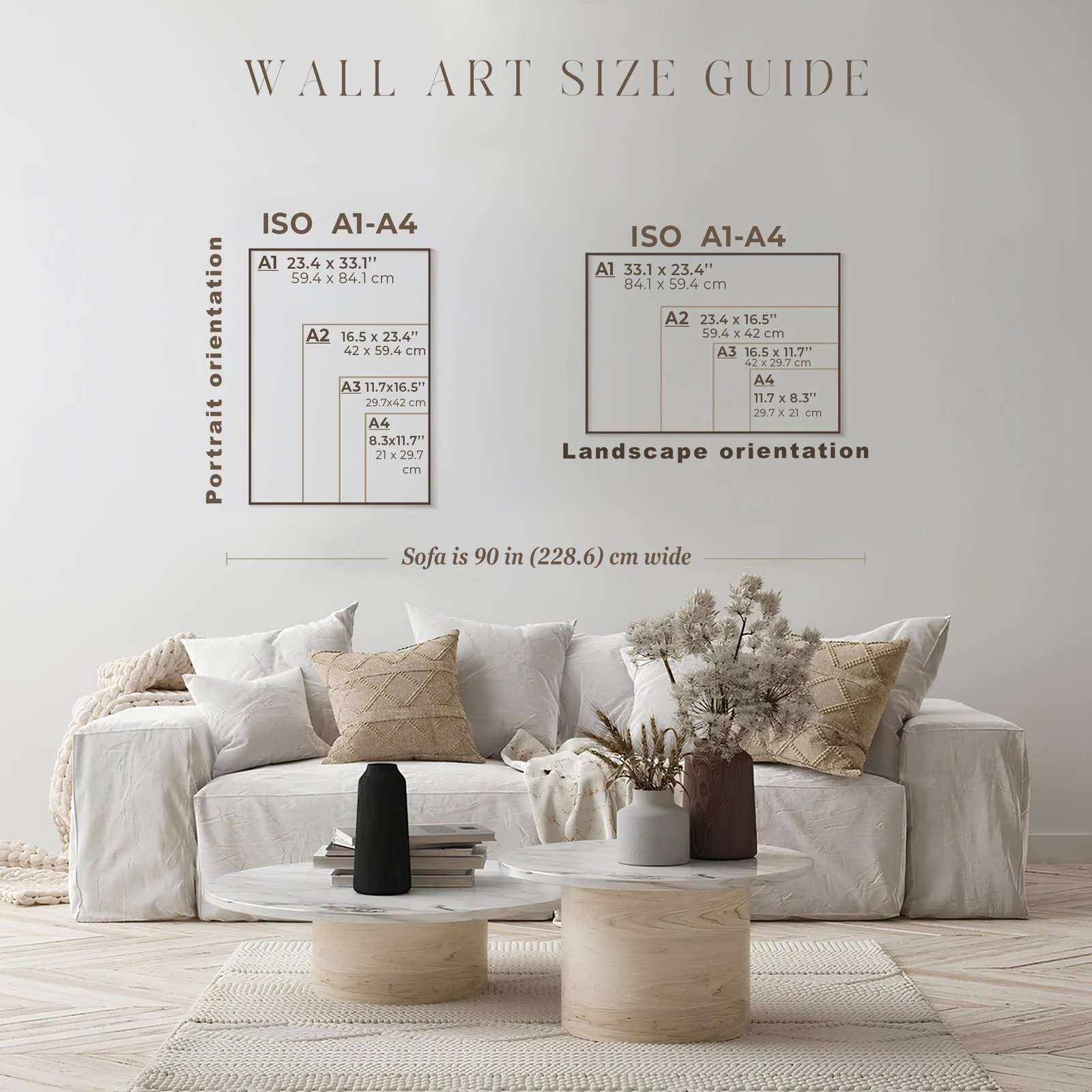
Available in 4 ISO sizes: A4, A3, A2, A1.
About the Ha’penny Bridge
Built in 1816 and originally named the Wellington Bridge, the Ha’penny Bridge takes its popular name from the halfpenny toll that pedestrians once paid to cross it.
It was one of the first cast iron bridges in Ireland, and for over a century it was the only pedestrian bridge crossing the Liffey in the city centre. It has outlasted the toll booths, the gas lamps, and several rounds of restoration — and it remains one of the most photographed and most loved structures in Dublin.
Not because it is grand or imposing, but because it is exactly the right size for a city that moves on foot, and because it is genuinely beautiful in the way that well-made functional things sometimes are.
Standing beneath it with a camera, looking up at the ironwork against the sky, you understand why it has lasted. Some things are made well enough that time simply has no argument with them.
Reviews
There are no reviews yet.